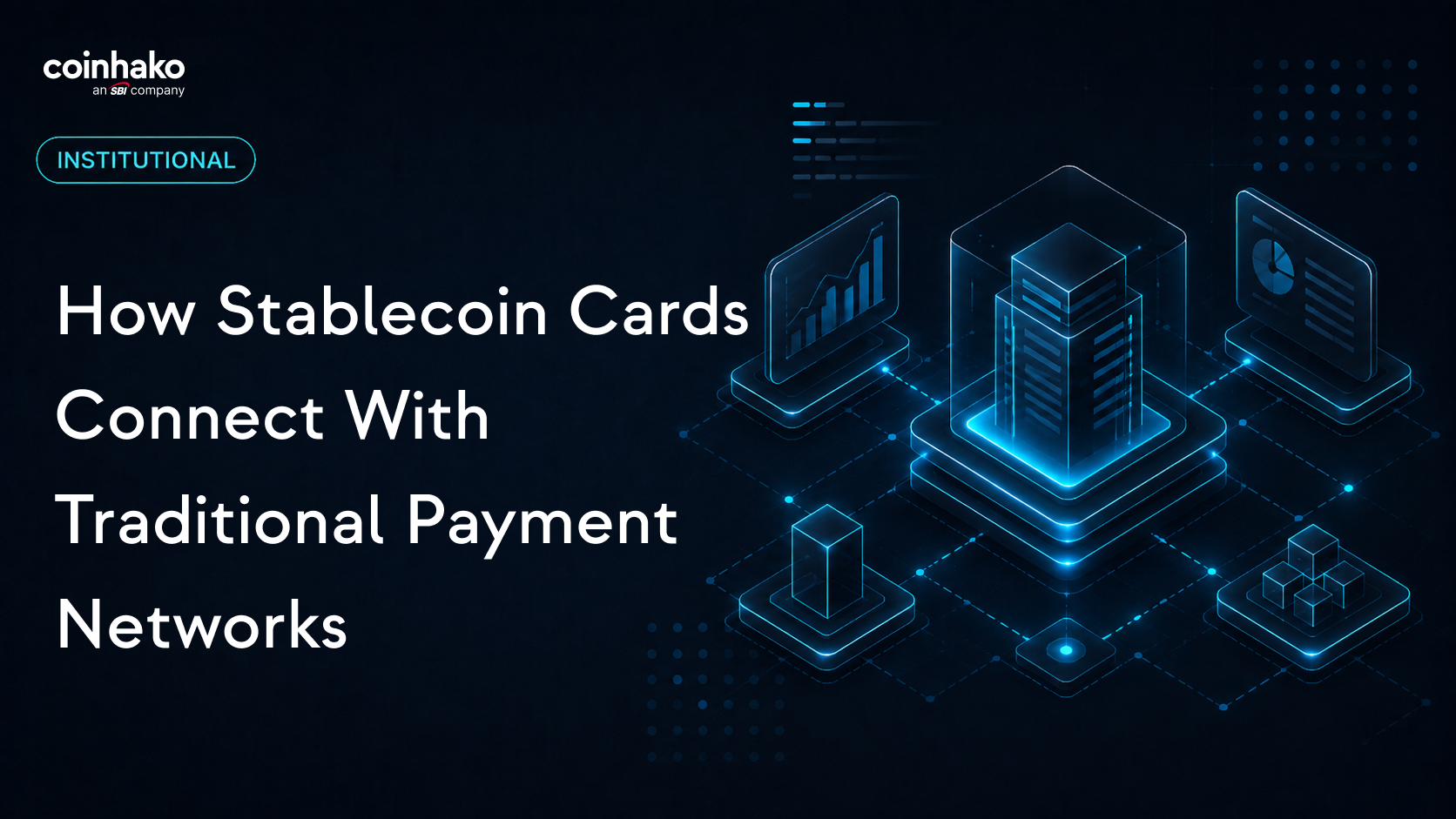
How do stablecoin cards work with payment networks?
A stablecoin card can connect an eligible stablecoin balance with established card payment infrastructure.
Although stablecoins may exist on blockchain networks, merchants do not necessarily need to receive or process stablecoins themselves.
Depending on the card programme, the stablecoin may serve as the funding source while the merchant transaction is processed through a traditional card network.
🤔 What happens when a payment is made?
A stablecoin-funded card transaction may involve several layers.
Card authorisation
When a card is presented, the merchant submits a payment request through the relevant card network.
Balance verification
The card programme checks whether sufficient eligible funds are available for the transaction.
Conversion
Where required, an amount of stablecoins may be converted into the currency needed for the payment.
Card settlement
The merchant receives settlement according to the arrangements of the relevant card and payment network.
The stablecoin and merchant-settlement processes do not necessarily take place on the same infrastructure.
Does the merchant need blockchain technology?
Not necessarily.
From a merchant's perspective, a stablecoin card may be accepted through existing card infrastructure where the relevant card network is supported.
The blockchain-related activity may take place separately within the funding and settlement arrangement.
Is every card payment recorded on a blockchain?
Not necessarily.
Although the source of funds may involve stablecoins, an individual merchant card transaction does not always correspond to a separate on-chain transaction.
The technical structure varies between card programmes and service providers.
Why connect stablecoins with existing payment networks?
Connecting the two systems may allow digital asset balances to interact with established payment infrastructure without requiring every merchant to directly integrate blockchain payments.
However, this can also involve multiple parties and processes, including:
- digital asset custody
- conversion
- card authorisation
- settlement
- compliance controls
- payment network infrastructure
Example
A user has an eligible stablecoin balance and makes a card purchase at a merchant.
The card transaction is authorised through the existing payment network.
The stablecoin balance may be used or converted according to the card programme's rules, while the merchant receives payment through its normal card acceptance infrastructure.
In summary
Stablecoin cards can act as a bridge between blockchain-based assets and traditional card payment networks.
Stablecoins may provide the funding source, while card networks continue to handle merchant authorisation and settlement.
The exact structure varies by card programme, payment network and jurisdiction.
Quick Answers
Does a merchant receive stablecoins when I use a stablecoin card?
Not necessarily. The merchant may receive settlement through its existing card payment arrangements.
Does every stablecoin card transaction happen on-chain?
No. Card processing and blockchain activity may occur through separate systems.
Do merchants need special crypto infrastructure?
Not necessarily where the payment is processed through an established card network.
Tell me more…
- What Is Cryptocurrency?
- What Is Blockchain?
- What Is Bitcoin?
- What Is Ethereum (ETH)?
- What Is a Crypto Exchange?
- What is a Stablecoin in Cryptocurrency?
- What is a Memecoin?
- How Does Crypto Trading Work?
- What Is Slippage in Crypto Trading and Why Does It Matter?
- APY vs APR in Crypto: What's the Difference?
- Crypto Fees Explained: Trading Fees vs Withdrawal Fees vs Network Fees
- What Are Gas Fees?
- What Are Ethereum Gas Fees and Why Do They Change?
- How to Check Ethereum Gas Fees Before Sending a Transaction
- Why Ethereum Transactions Get Stuck and How to Fix Them
- What are Ethereum Layer-2 Blockchains?
- What Is a Crypto Wallet and How Does It Work?
- Hot Wallet vs Cold Wallet: Which Is Safer for Storing Crypto?
- Private Keys vs Public Keys: What’s the Difference in Crypto?
- How to Keep Your Crypto Secure
- Cybersecurity in Singapore: How to Identify Fraudulent Investment Schemes and Protect Your Bitcoin
- Bitcoin Security in Singapore: How to Store and Protect Your Digital Assets Safely
- Crypto Wallet Security in Singapore: How to Safeguard Your Bitcoin and Private Keys
- Buying Bitcoin in Singapore: How to Start Investing in Digital Assets Safely
- Bitcoin Transactions Explained: How to Send and Receive Digital Assets Safely
- Crypto Phishing Attacks in Singapore: How to Identify Fake Websites and Protect Your Digital Assets
- Common Crypto Scams in Singapore and How to Avoid Them
- What Is MEV (Maximal Extractable Value) in Crypto?
- What Is a Smart Contract in Blockchain?
📬 Stay Updated
📩 Sign-up to Subscribe to our mailing list to have them delivered straight to your inbox!
👉 Follow our X.
🤝 Need Help?
🤔 If you have any enquiries, you may contact us here or you can visit our Information Page.
🌏 Coinhako is available in these countries!
🚀 Buy Bitcoin at Coinhako Singapore
Copyright © Coinhako 2026 All Rights Reserved. Read more on our terms of use of this blog.
All opinions expressed here by Coinhako.com are intended for educational purposes, taken from the research and experiences of the writers of the platform, and should not be taken as investment or financial advice.